
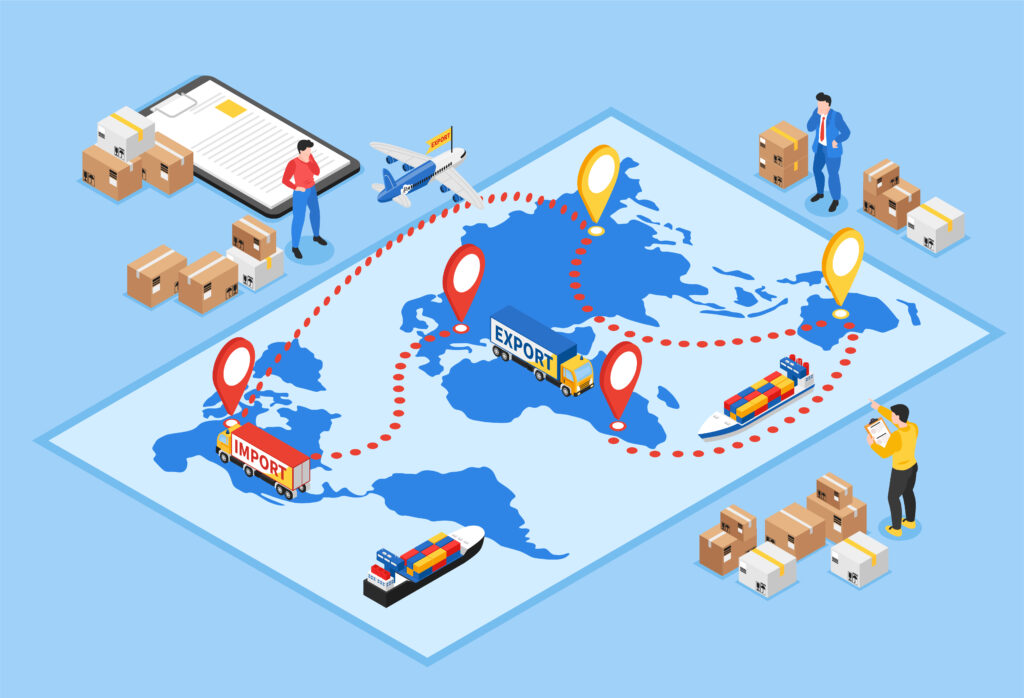
There is a certain assumption most first-time importers carry.
That freight forwarding is about booking space and moving cargo.
It isn’t.
What actually moves a shipment from China to India is not just transport. It is coordination. Documentation. Timing. And a sequence of steps that, if not aligned properly, begin to work against each other.
If you are searching for the Best freight forwarder from China to India, what you are really looking for is not a vendor who can move cargo. You are looking for a system that can manage the process without gaps.
Because the gaps are where delays begin.
Let’s walk through the process the way it actually unfolds.
Understanding Freight Forwarding in Practical Terms
Freight forwarding is often described in simple terms. An intermediary arranges the movement of goods from origin to destination.
But in reality, it is closer to process management than arrangement.
A forwarder is responsible for:
- Coordinating pickup
- Managing documentation
- Booking freight
- Handling compliance
- Supporting customs clearance services
- Ensuring delivery
Each stage depends on the one before it.
That dependency is what makes freight forwarding either smooth or problematic.
Step 1: Supplier Coordination and Shipment Readiness
Everything begins at the supplier’s end in China.
Before any movement happens, the shipment must be ready in terms of:
- Packaging
- Quantity verification
- Product details
- Export documentation
This stage is often underestimated.
If there is a mismatch between what is packed and what is declared, it does not correct itself later. It becomes a customs issue at the destination.
A structured freight forwarder ensures that:
- Details are confirmed early
- Packaging aligns with transport requirements
- Documentation begins correctly
It is a quiet step, but it sets the direction for everything that follows.
Step 2: Pickup from Origin
Once the shipment is ready, it is collected from the supplier.
This may involve:
- Local transport within China
- Coordination with warehouse or factory
- Initial handling checks
For shipments from regions like Guangzhou, Yiwu, or Shenzhen, this process is usually straightforward. But even here, timing matters.
Delays at pickup can shift the entire shipment schedule.
A reliable forwarder ensures that pickup is aligned with the planned freight movement, not treated as a separate activity.
Step 3: Consolidation at Origin (If Required)
Not all shipments move as full containers.
In many cases, especially for SMEs, goods are sourced from multiple suppliers in smaller quantities.
This is where consolidation becomes relevant.
Shipments are brought together at origin hubs and combined into a single load.
This helps:
- Reduce freight cost
- Optimise cargo space
- Maintain organised documentation
But consolidation needs to be structured.
If done poorly, it creates documentation confusion later. If done properly, it improves efficiency across the entire shipment.
Step 4: Freight Booking and Mode Selection
With cargo ready, the forwarder books the shipment.
This involves choosing between:
- Air freight for faster delivery
- Sea freight for cost efficiency
The decision depends on:
- Urgency
- Volume
- Budget
This stage is not just about booking space.
It also includes:
- Route planning
- Carrier selection
- Timeline alignment
A forwarder who simply books the cheapest option may reduce cost upfront but create delays later.
Balance is important.
Step 5: Export Documentation and Compliance in China
Before the shipment leaves China, export documentation must be completed.
This includes:
- Commercial invoice
- Packing list
- Export declarations
- Any required certifications
If documents are incomplete or inconsistent, the shipment may not be allowed to move.
Or worse, it moves and gets held later.
This is where coordination between supplier and forwarder becomes critical.
Step 6: International Transit
Once cleared for export, the shipment moves.
At this stage, the cargo is in transit between China and India.
For air shipments, transit is shorter but requires tighter coordination.
For sea shipments, transit is longer but more cost-efficient.
During this phase, preparation for the next stage begins.
Step 7: Customs Clearance in India
This is where many shipments slow down.
And in most cases, the reason is not transport.
It is documentation.
Indian customs checks:
- Product classification
- Declared value
- Compliance with import regulations
- Supporting documents
Strong customs clearance services ensure that:
- Documents are aligned
- Duties are calculated correctly
- Queries are minimised
If this stage is not prepared in advance, delays become inevitable.
Step 8: Duty Payment and Release
Once customs processes the shipment, duties and taxes are applied.
After payment:
- The shipment is cleared
- Release is granted
If there are discrepancies, reassessment may happen.
This adds time and cost.
Accuracy earlier in the process reduces these risks.
Step 9: Last-Mile Delivery
After clearance, the shipment moves to its final destination.
This involves:
- Local transportation
- Delivery coordination
- Final handover
At this point, the process is close to completion.
But even here, coordination matters.
What Separates a Good Forwarder from the Best
Many forwarders can handle individual steps.
Fewer can manage the entire chain without gaps.
The Best freight forwarder from China to India typically ensures:
- Early-stage verification, not last-minute correction
- Structured consolidation, not informal grouping
- Balanced freight planning, not just cost-based booking
- Strong customs clearance services, not reactive handling
- Coordinated delivery, not fragmented execution
The difference is not always visible at the start.
It becomes clear when shipments move consistently without disruption.
A More Practical Way to Look at Freight Forwarding
Freight forwarding is not a single service.
It is a sequence.
Each step supports the next.
When that sequence is aligned, the shipment flows.
When it is not, delays appear at the weakest point.
Final Thoughts
Importing from China to India will always involve multiple stages.
That will not change.
What can change is how those stages are managed.
At Grand Slam Express, we focus on keeping the process aligned from the first supplier interaction to final delivery, including customs clearance services, so that the movement feels continuous rather than fragmented.
Because in freight forwarding, continuity is what keeps everything moving.
FAQs
1. What does a freight forwarder do?
A freight forwarder coordinates international shipping, handling logistics, documentation, and compliance. They ensure smooth movement of goods across borders.
2. How long does shipping from China to India take?
Air freight takes around 3–7 days, while sea freight takes 15–35 days. Timelines vary based on route, service, and customs clearance.
3. What documents are required for freight forwarding?
Common documents include invoice, packing list, export declaration, and import paperwork. Accurate documentation helps avoid delays.
4. What is consolidation in freight forwarding?
It combines multiple shipments into one to reduce costs and improve efficiency. This is especially useful for smaller shipments.
5. Why do shipments get delayed at customs?
Delays usually occur due to incorrect documents or classification errors. Compliance issues can also slow down clearance.
6. Can small businesses use freight forwarding services?
Yes, small businesses benefit from cost savings through consolidation. It makes international shipping more affordable and manageable.
7. How to choose the best freight forwarder?
Choose one with strong experience, clear processes, and reliable customs handling. Good communication and transparency are also important.