
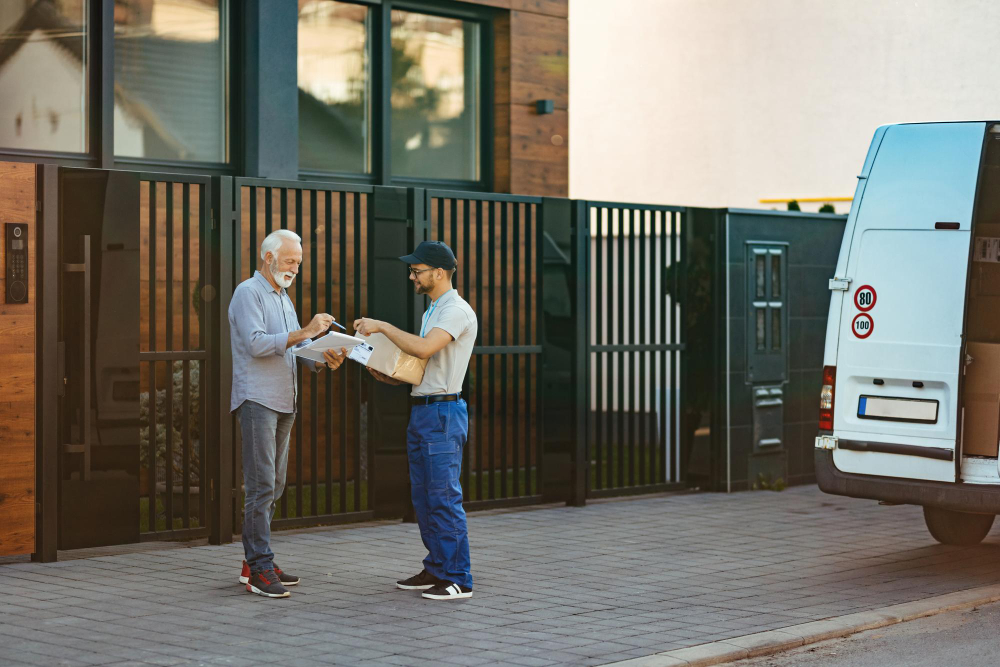
If you are trying to understand how to do to international door to door service, it usually means one thing. You are either planning your first international shipment or you are tired of managing too many moving parts in your current process. And fairly so. International logistics is not just about transport. It involves coordination, documentation, and reliable customs clearance services working together without gaps. When these elements are handled within one system, the process becomes far more predictable and manageable. That is where door-to-door service begins to make real sense.
Understanding International Door-to-Door Service
International door-to-door service is a logistics model where a single provider takes responsibility for the entire shipment journey.
From the supplier’s location in one country to the final delivery address in another, every stage is managed within one coordinated flow.
This includes:
- Pickup from origin
- Freight movement (air or sea)
- customs clearance services
- Final delivery
The shipment still passes through multiple stages. But instead of being handled by different vendors, it moves through one system.
That difference matters more than it seems.
How to Do International Door-to-Door Service
When businesses ask how to implement this model, the answer is not about complexity. It is about structure.
The process itself follows a sequence. What changes is the ownership of that sequence.
Pickup from the Supplier
The shipment begins at the source.
Goods are collected from the supplier and prepared for export. This includes packaging checks, quantity verification, and initial documentation.
If something is incorrect at this stage, it does not get corrected automatically. It usually appears later, often during customs clearance.
That is why this step needs attention.
Consolidation of Shipments
In many cases, shipments are not large enough to fill a container.
So goods from multiple suppliers are combined at origin hubs.
This helps:
- Reduce shipping cost
- Optimise cargo space
- Keep documentation organised
For growing businesses, consolidation is not optional. It is necessary.
Freight Movement
Once ready, the shipment is moved internationally.
Depending on urgency and cost:
- Air freight is used for faster delivery
- Sea freight is used for larger volumes at lower cost
The movement looks simple. But the preparation behind it continues.
Customs Clearance
This is the stage where most shipments slow down.
Not because the system is complicated, but because it is strict.
Customs checks:
- Documentation accuracy
- Product classification
- Declared value
- Compliance requirements
Strong customs clearance services ensure that:
- Documents are aligned
- Duties are calculated correctly
- Queries are minimised
When this stage is prepared properly, the process becomes smoother.
Final Delivery
Once the shipment is cleared, it moves to its final destination.
This involves:
- Local transportation
- Delivery coordination
- Final handover
At this point, the focus shifts from compliance to execution.
Why Businesses Choose Door-to-Door Shipping
Over time, businesses realise that managing multiple vendors becomes difficult.
Door-to-door service simplifies that.
Single Point of Coordination
Instead of handling different providers, there is one system managing the entire process.
This reduces confusion.
Better Cost Visibility
When the shipment is managed end-to-end, costs can be estimated more accurately.
In many cases, especially with DDP models:
- Duties
- Taxes
- Handling charges
Are calculated upfront.
Reduced Delays
When documentation and compliance are handled within one structure, mismatches reduce.
Which means fewer delays at customs.
Lower Operational Effort
You are not chasing updates across multiple vendors.
The process becomes more controlled.
Where Things Can Still Go Wrong
Door-to-door service improves coordination, but it does not remove all risks.
Weak Customs Handling
If customs clearance services are not strong, delays will still happen.
Lack of Transparency
Some providers bundle costs without clarity.
That creates confusion later.
External Factors
Delays can still occur due to:
- Port congestion
- Inspections
- Transit disruptions
No system eliminates these completely.
A Practical Perspective
International shipping will always involve complexity.
Door-to-door service does not remove it. It organises it.
Instead of managing multiple moving parts separately, the process is handled as one continuous flow.
That shift makes a noticeable difference.
Final Thoughts
For businesses dealing with regular imports or exports, the real challenge is not movement. It is coordination.
At Grand Slam Express, we approach door-to-door shipping by keeping every stage aligned, from pickup at origin to final delivery, including customs clearance services.
We do not simplify the system. We simplify how you move through it.
FAQs
1. What is international door-to-door service?
A complete logistics solution where one provider manages pickup, shipping, customs clearance, and final delivery. It simplifies the entire process for the sender.
2. How to arrange international door-to-door service?
Select a logistics partner that handles end-to-end shipping, including documentation and customs. Provide accurate shipment details to avoid delays.
3. Is door-to-door shipping reliable?
Yes, it ensures better coordination since a single provider manages the entire process. This reduces delays and communication issues.
4. Does door-to-door shipping include customs clearance?
Yes, customs clearance is typically included as part of the service. The provider handles documentation and compliance requirements.
5. Who should use door-to-door shipping?
Businesses with frequent international shipments or multiple suppliers benefit the most. It saves time and reduces logistical complexity.